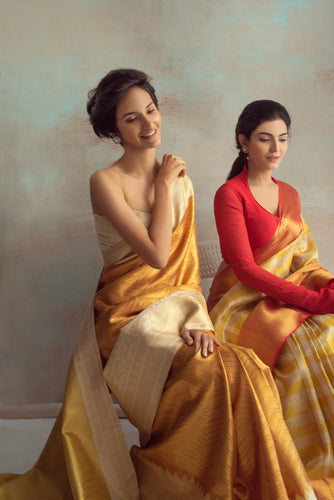


The Time Honoured collection celebrates the enduring artistry of traditional Kanjivaram silk weaving, bringing together pure handwoven Kanjivaram silk sarees crafted with exceptional patience and precision. Each saree in this selection reflects the intricate craftsmanship and time tested techniques that defines authentic Kanchipuram silk.
Some designs cannot be rushed. Rich zari brocades, tissues, korvai borders, vaira oosi, classic checks, traditional motifs and elaborate pallus require extended time on the loom where every thread is placed with care and intention. The sarees in this collection embody a slower, more thoughtful process of handwoven Kanjivaram silk craftsmanship that has shaped the legacy of Kanjivaram silk sarees for generations.
At Muhurth, the Time Honoured Kanjivaram silk saree collection brings together sarees that embody this depth of artistry and uniqueness. These luxurious handwoven Kanjivaram silk sarees are created for weddings, bridal trousseaus, festive celebrations and meaningful occasions that deserve the richness and elegance of timeless silk.

FAQs – Time Honoured Collection
1. What makes the Time Honoured Kanjivaram saree collection special?
The Time Honoured collection features pure handwoven Kanjivaram silk sarees that celebrate the traditional artistry of Kanchipuram weaving. These sarees are crafted with patience and precision, often requiring extended weaving time to create intricate zari brocades, korvai borders and detailed motifs.
2. How long does it take to weave a Kanjivaram Silk Saree?
The time required to weave a handwoven Kanjivaram silk saree depends largely on the complexity of the design and weaving technique. Once the raw materials are prepared and the loom is fully set up, a traditional korvai Kanjivaram silk saree with buttas or a single-shuttle brocade weave typically takes about six days to complete on the loom. More intricate sarees, however, require significantly longer. Designs that involve multiple-shuttle weaving techniques such as double nada brocade, Meenakari work, Vaira Oosi, tissue weaving, or Rangkat constructions as in this collection demand far greater precision and time. Depending on the level of complexity, these elaborate handwoven Kanjivaram silk sarees can take anywhere between 15 to 45 days of weaving on the loom.
3. How can I identify a pure Kanjivaram silk saree?
A pure Kanjivaram silk saree is defined by the quality of its silk, the authenticity of its zari and the depth of its craftsmanship. Together these elements shape the character of the saree and give it the durability, lasting strength and distinctive richness for which Kanjivaram silks are admired. The beauty of a Kanjivaram silk saree also lies in its vibrant and richly layered colours which are often enhanced with touches of gold zari. This harmony of luminous silk colour and zari brilliance gives the saree its timeless appeal and makes it a treasured part of an Indian woman’s wardrobe chosen for the most significant and auspicious occasions. At Muhurth every saree is woven using the purest mulberry silk together with the highest form of authentic zari and exceptional handwoven craftsmanship.
4. What designs are commonly found in Kanjivaram silk sarees?
Kanjivaram silk sarees are celebrated for their distinctive design language where tradition, culture, and craftsmanship come together. Cultural narratives of our motherland and the history of our bygone eras remain a constant muse in shaping these masterpieces. Many design inspirations draw from temple architecture, sacred forms, flora and fauna acquainted in the southern part of India reflecting the rich visual vocabulary of the region. At Muhurth, this spirit of evolution is thoughtfully embraced by introducing motifs such as tulips, English roses, pine, cockatoo parrots and so on with designs that speak to the present while blending seamlessly into the classical framework of Kanjivaram weaving. These contemporary inspirations are beautifully incorporated within traditional structures like classic kattams (checks), florals, and other timeless layouts while remaining faithful to the discipline and integrity of handwoven silk.
5. Which Kanjivaram silk saree is suitable for a wedding?
Kanjivaram silk sarees have long been associated with bridal and ceremonial occasions and are often chosen for their richness and enduring craftsmanship. When selecting a Kanjivaram silk saree for a wedding it is important not to compromise on the quality of the raw materials, the authenticity of the zari or the depth of the handwoven craftsmanship. A wedding saree is expected to carry a certain presence and longevity which is why sarees woven with pure silk authentic zari and intricate weaving techniques are preferred. Designs with rich zari brocades, traditional korvai borders, elaborate pallus and striking colour combinations are especially well suited for weddings as they bring a sense of grandeur and distinction to the occasion.
6. What makes a handwoven Kanjivaram silk saree unique?
In today’s fast evolving world where technology continues to advance rapidly there are many ways to replicate silk sarees through power looms. Designs such as basic korvai sarees, simple butta layouts and single brocade patterns can be produced quickly and with uniform precision. As a result these mechanically woven sarees often appear identical with very little variation from one piece to another. A handwoven Kanjivaram silk saree however carries the quiet signature of the artisan who brings it to life on the loom. The richness of the weave, the subtle variations in silk texture and the gentle irregularities that may appear within motifs or at the meeting points of a korvai border reveal the presence of the human hand behind the craft. These nuances are not imperfections but expressions of authentic hand weaving which lend every saree its own character depth and individuality.
7. How to maintain a pure Kanjivaram silk saree?
To preserve the beauty of a pure Kanjivaram silk saree it is recommended to air dry the saree after every use before storing it. The saree should be kept in a breathable cotton cloth which allows the silk and zari to remain protected while preventing moisture build up. Refolding the saree occasionally is also important as it helps prevent stress along the same crease lines and protects the zari work from breakage over time. To enhance the longevity of your Kanjivaram silk saree you may also refer to our complete care guide which provides detailed instructions for maintaining handwoven silk.
Featured Products