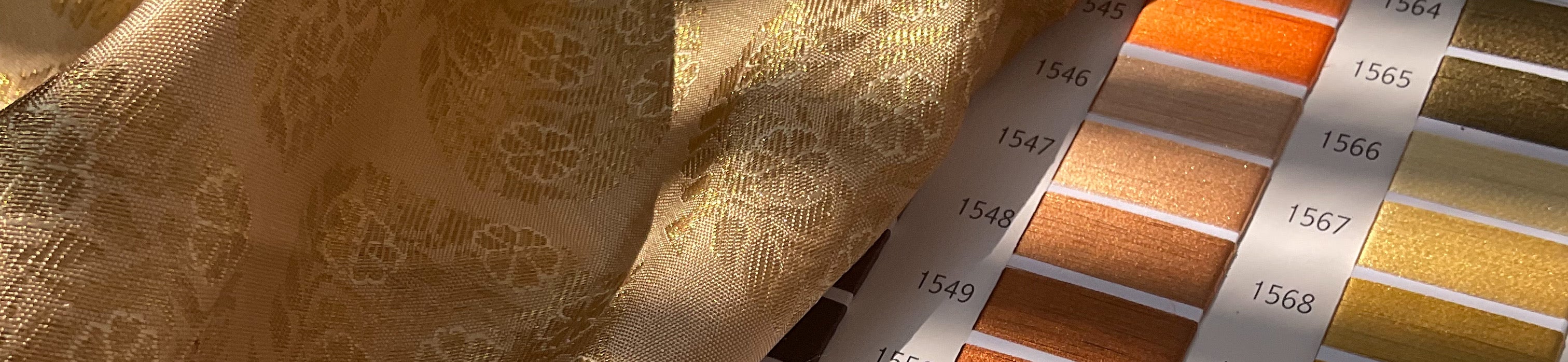
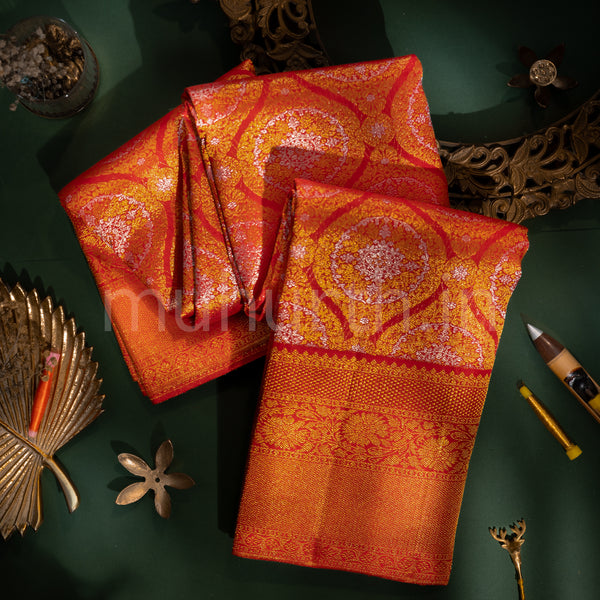
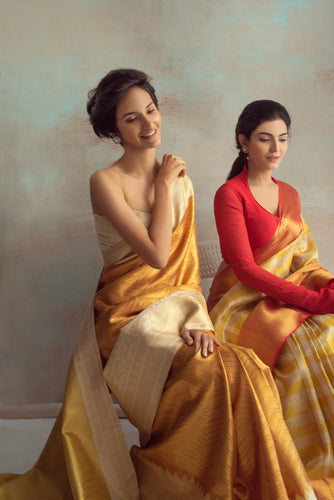
Explore Muhurth’s Kanjivaram silk saree collections, from Pure Zari, Vaira Oosi and Meenakari to Tissue, Rangkat, Organza & Kora and Vintage Kanjivarams. Each collection brings together a distinct weave, design language or colour story, reflecting the many expressions of Kanjivaram silk.
FAQs
1. What makes Muhurth’s Kanjivaram collections distinctive?
Muhurth’s collections bring together traditional Kanjivaram weaving techniques, distinctive zari work, considered colour palettes and sarees for different occasions. The range includes Pure Zari, Vaira Oosi, Meenakari, Rangkat, Tissue, Organza & Kora Kanchi, Vintage and bridal collections. Muhurth sarees are 100% handloom and Silk Mark certified.
2. Does Muhurth offer Kanjivaram sarees beyond bridal wear?
Yes. Alongside bridal collections such as Blushing Brides, Muhurth presents Kanjivaram sarees for weddings, festive occasions and family celebrations. The collections also explore different weaving techniques and design languages through Vaira Oosi, Pure Zari, Meenakari, Rangkat, Tissue and Vintage Kanjivarams.
3. What types of zari are used in Muhurth Kanjivaram sarees?
Muhurth offers Kanjivaram sarees woven with different zari specifications, including Pure Zari, Half Fine and Tested Zari. The zari specification is disclosed for each saree, allowing you to understand the composition and finish of the weave before making your choice.
4. How does Muhurth approach traditional Kanjivaram weaving?
Muhurth works with traditional Kanjivaram techniques while continuing to explore the many possibilities within the craft. Techniques such as Korvai, Vaira Oosi, Meenakari, Tissue and Rangkat reflect the depth of weaving knowledge carried through generations.
5. How do I choose the right Muhurth collection?
Begin with the kind of saree you are drawn to. Pure Zari and bridal collections offer a more ceremonial expression, while Vaira Oosi, Meenakari and Rangkat place greater emphasis on distinctive weaving and detailing. Tissue and Organza & Kora Kanchi offer a lighter, more luminous character, while Vintage Kanjivarams return to classic colours, motifs and proportions.